

Mothmen and Shark Riders: the mind-melting fantasy of pixel-pulps | PC Gamer - warfieldtonts1978
Mothmen and Shark Riders: the mind-melting fantasy of pel-pulps
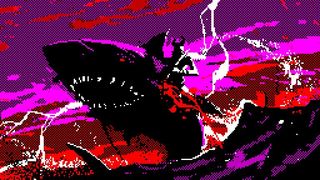
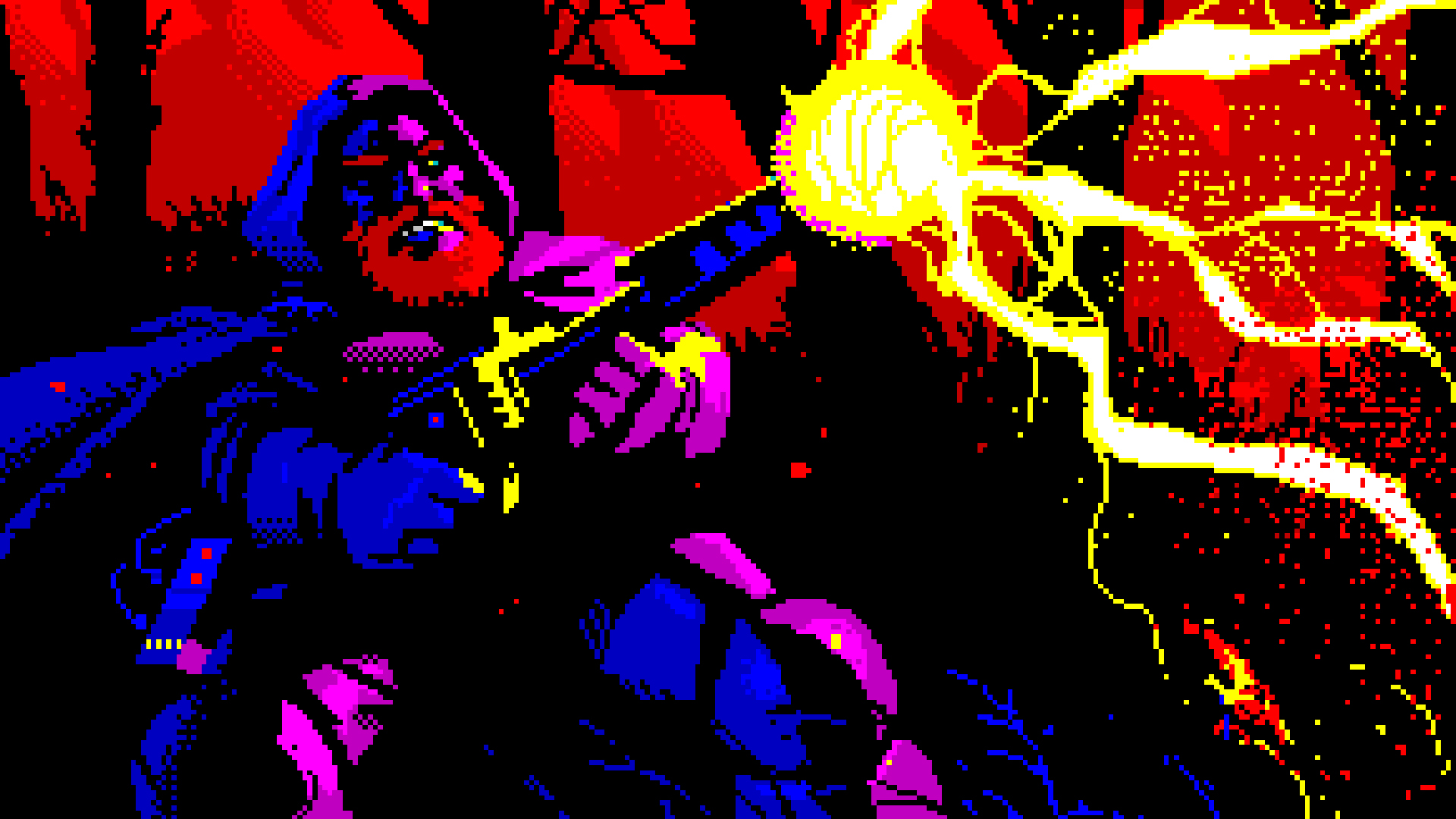
Plunging headfirst into the fast-paced, furious world of Shark Riders is a get off. Pixelated purples and reds color a dramatic world of ancient songs, fish gods, and lycaons—desert dogs that vital short, drug-sodden lives. As the bearded chief of a navigation village, I solemnly prick my gums with a hallucinogenic cactus spine and set up to perform an old ritual. Information technology is prison term to summon the peachy great white shark.
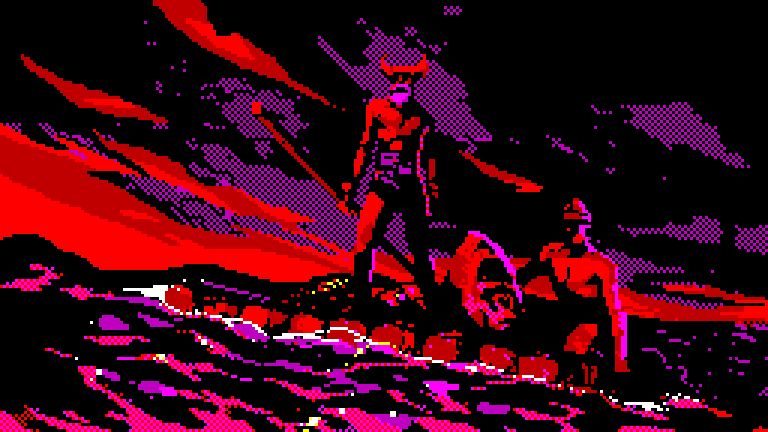
Equal in the form of a short modality novel, Shark Riders taps into the naked as a jaybird, fantastic otherworldliness of Conan the Barbarian and the rough, primeval illusion of Krull—a nonrational type of fiction powered past epinephrin and huge '80s movie-energy. It's a quick, well-paced playthrough where each conviction feels plucked from a 1940s paperback, sharp and snappy and harmonizing attractively with the bold, moody ZX Spectrum color palette. I suddenly feeling the itch to put on some Ennio Morricone As I blast through this first "pixel-pulp", which is what LCB Game Studio apartment, a tiny indie studio in Argentina, calls this eccentric of short, serial game.
Our first fiction together was The Atlantean Butcher
Nico Saraintaris
Writer/game designer Nico Saraintaris and illustrator Fernando Martinez Ruppel progress to up LCB Game Studio, formed as an ode to the glory days of serialized pulp magazines that brought strange galaxies of fiction to the multitude for loud. Merely for Saraintaris and Ruppel, the pel-pulp magazine isn't meet a notional genre—it also means taking a different approaching to development. "Pulp for us is a go ethic, it's understanding creative product as a trade," explains Saraintaris. "Our goal is to accommodate this path of impermanent from what was the pulp production of the first half of the 20th one C to videogame production."
Back then, pulp fiction was an diligence, churning out juicy serial fable in rough wood-mush paper magazines sold on street corners and through subscriptions. They ran the gamut from intoxicating adventures and lurid sci-fi stories to prohibited-of-this-world fantasies and racy repulsion. Pulp was cheap, readily available, and wildly popular. Even literary icons like Bradbury and Sinclair Lewis wrote pulp stories for a flake of steady income.
Saraintaris and Ruppel's pixel-pulps, featuring heavy stylized pixel art covered saturated colours, walk the same path as their spiritual ancestors. The pair first met in 2012 patc collaborating on literary projects, which light-emitting diode to creating their own publisher called LCB or "Literatura Clase B" (basically "b-family literature"). "Our first fiction together was The Atlantean Butcher, a serial of illustrated short stories in the vein of [Robert E.] Howard's... sword and sorcery, all mixed up with the mysteries of Atlantis," says Saraintaris. Information technology wasn't long-staple before they started in earnest trying to push a pulp revival meeting in Argentina with novellas like Mano Propia.
Saraintaris and Ruppel also started doing game jams, which led to LCB Game Studio As an extension of their literary exploit. One of their first projects was a racing game in a Land quad dependency full of Vladimir Ilyich Lenin clones—then came The Penanggalan, a horror-puzzler involving the magic Malay creature and the first appearance of the LCB's "Empirical Folklore Bureau." Saraintaris and Ruppel eventually decided to wispy into their literary roots to start a tradition of their own. "We jest and say that our pixel-pulps are Snatcher-like visual novels," Saraintaris says, referring to Kojima's cult 1988 game, "although the vast majority of creative work that influences our work comes from the world of comics and pulp fabrication."
...we are limited by using the ZX Spectrum palette
Nico Saraintaris
And so, for Adventure Jam 2021, Shark Riders was Born. Saraintaris describes it as a proof-of-concept game—it was ready-made in just 2 weeks, but their fully-complete picture element-pulps will be longer with more glossiness. "Our pixel-pulps have short dev-cycles per 'issue'," Saraintaris explains. "We like to retrieve in terms of issues because it points at the same meter to something that can be consumed arsenic a standalone piece but framed in a larger taradiddle, a much-used serialization device in pulp narrative. For the development of each issue we allocate a maximum of quaternion months, which allows us fluidity between projects."
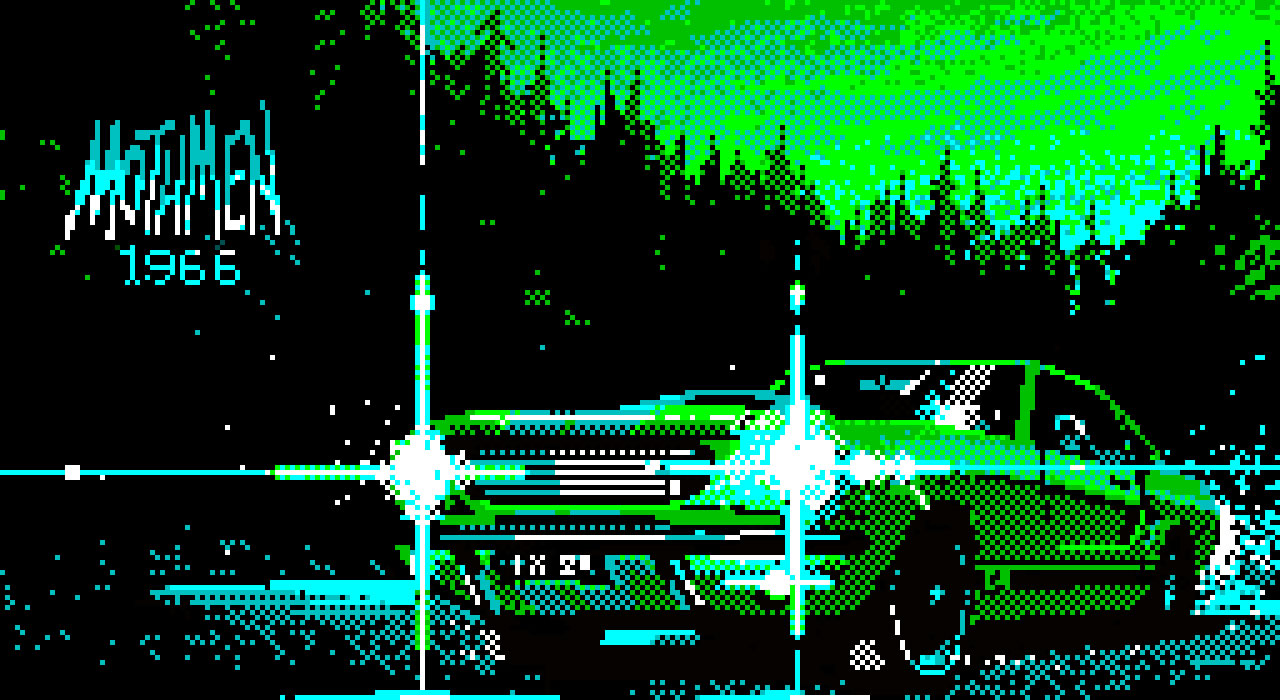
One of their electric current industrial plant-in-progress is Mothmen 1966, a tale born from a long history of weird fiction and softened sci-fi from the '60s and '70s to the inst. Saraintaris and Ruppel are some fans of writers like R.A. Lafferty and John Langan, and on the painterly nominal head, Argentine artists Alberto Breccia and Jorge Zaffino. Merely perhaps most important is the overwhelming breathing in of Charles Fort, the early 20th-hundred writer whose research on weird phenomena arranged the foundation for the 'fortean' subculture that deals with everything that scientific discipline terminate't seem to excuse. "We are very 'fortean'," says Saraintaris. "One of the characters in Mothmen 1966 is Lou Alfred Hawthorne, a Fortean writer and researcher… [he's] something like our double, a resource that allows us to suture the meta-narrative of our pixel-pulps."
Mothmen 1966, set amidst the Leonid meteor shower of 1966, involves (you guessed it) the mothman legend, which was popularized in John Keel's 1975 reserve The Mothman Prophecies. The stake will feature film reciprocal elements new to their visible novels, like a playable in-earthly concern solitaire secret plan ("a well-nigh impossible game to come through," says Saraintaris) that affects the main character's relationship with an NPC.
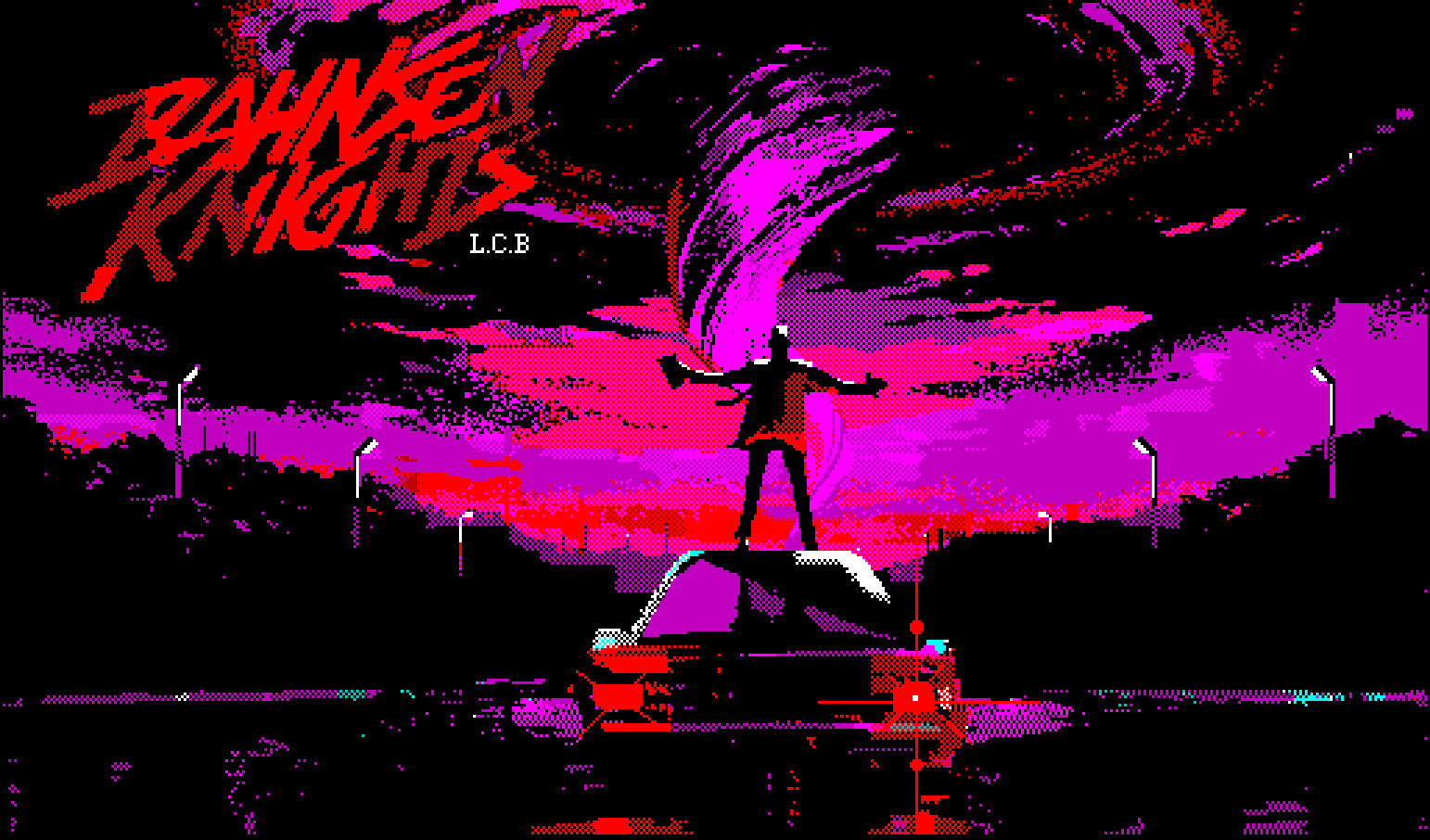
They're also working on Bahnsen Knights, featuring sacred fanatics, F5 tornadoes (the strongest, most deep tornadoes you can have), and Ford Sierras. So far, the headstone picture element art looks appropriately nonwoody. Rich, saturated tones make the light and shadows die down the sieve. Saraintaris explains that their aesthetic is designed to deliberately call in times and environments from a bygone era. "In damage of color—and as we are limited by exploitation the ZX Spectrum palette—the utilisation of chiaroscuro is of import," he says. "The image should work in black and white."
Just their first proper pixel-pulp is going to be Red Dragon Down, described as
"Black Vend Down with dragons" happening the game's itch.io page. Saraintaris says it's just "waiting for its moment" to comprise released. It's a oddments of fantasy and state of war epics, centered around a group of heavily armed dwarves protecting a dragon laden with gold. "Our idea is to start publication pel-pulps as a studio apartment and never blockade, a bit same our heroes piece of writing dime novels Oregon publication stories in pulp magazines."
While this might seem like a straightforward nostalgia play, LCB seems to throw latched on to something really special with the idea of quick and dirty serial games; Saraintaris, as an experienced author, brings a real sense of polish to the prose, while Ruppel's work is a perfect complement to the sensationalist overtones of pulpy fantasy and horror. If pixel-pulps want to turn the pulp fiction of sense modality novels, I'm wholly for it.

Source: https://www.pcgamer.com/mothmen-and-shark-riders-the-mind-melting-fantasy-of-pixel-pulps/
Posted by: warfieldtonts1978.blogspot.com
0 Response to "Mothmen and Shark Riders: the mind-melting fantasy of pixel-pulps | PC Gamer - warfieldtonts1978"
Post a Comment