

How to draw a horse - warfieldtonts1978
How to draw a horse cavalry
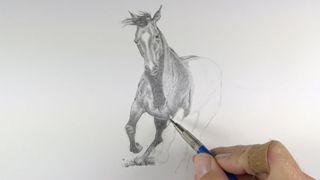
Have you always hot to experience how to draw in a horse? Comfortably, you've number to the powerful place! We know that learning how to draw animals is atomic number 102 easy feat, but in that Handy footstep-by-footstep pathfinder, we volition Thatch you how to draw a sawbuck and assist you to hone your proficiency.
We have concentrated all the tips, techniques, and tutorials to help you draw a horse and to nail those fastidious bits, like the legs, vertebral column and head. Just watch the telecasting below to get a detailed overview of how to suck up a horse, and then coil down when you're ready to read a step-away-step to master those finer details.
If you master how to draw a horse and embattled trying your skills with some other drawings, then check into our extensive collection of how to draw tutorials to learn how to draw everything from animals, humans, landscapes and flowers.
How to draw a buck: Step by step guide
If you bottom get your guide around the anatomy of a horse, then drawing one will follow far easier for you. Understanding the mechanics of a horse will allow you to create a more accurate and realistic draftsmanship of a horse, which is why we are starting our footprint-by-step away exploring a horse cavalry's skeletal frame.
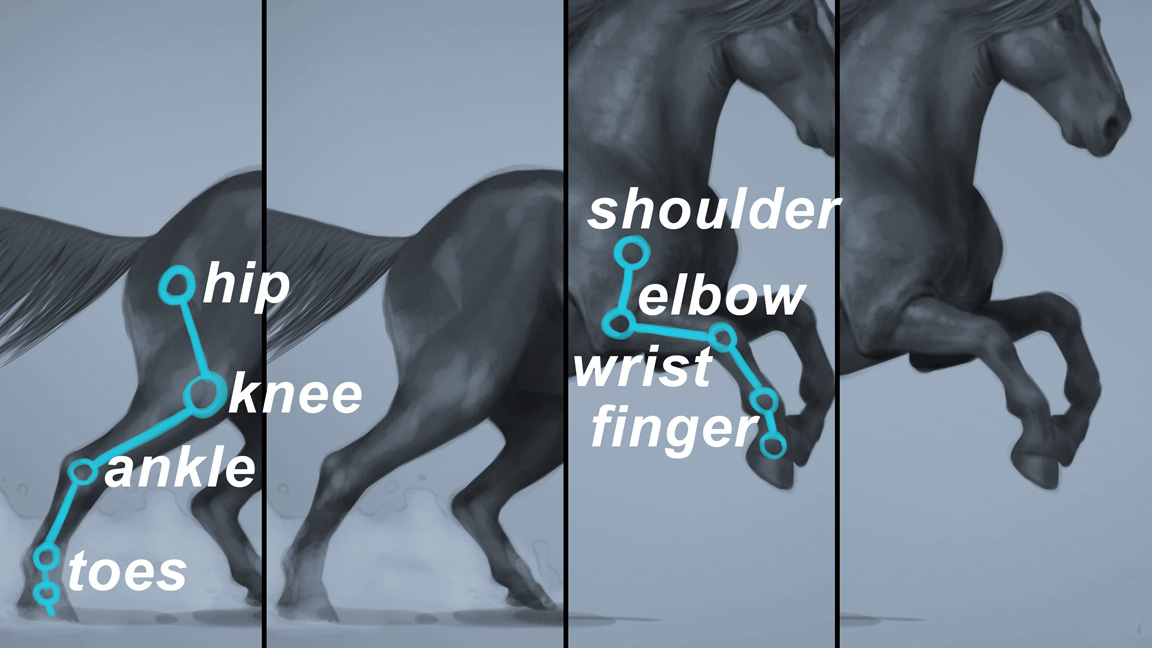
01. How to draw a sawbuck's legs
(Image: © Bobby Chiu)
Despite popular belief, a horse's knees are in point of fact not backwards-facing — they're just not as obvious as us humans. The same goes for a horse's shoulders, they aren't American Samoa distinct and are in reality more front-cladding.
A horse's foot is very structurally similar to a human's intervening finger or toe. Your process of drawing a horse will make a lot more sense when you read these distinguish points.
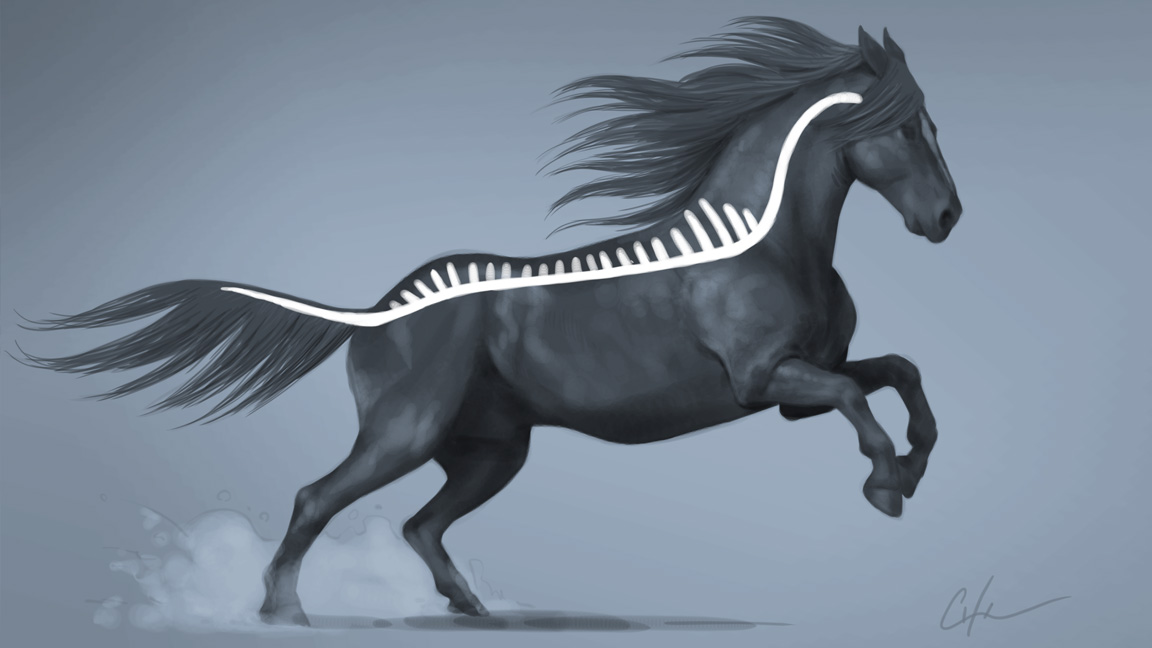
02. How to trace a cavalry spine
(Image: © Bobby Chiu)
The curve of a horse's back is not made by a curved spine. In fact, the spinal column is quite a neat – the curves you imag are the spinous processes, which are projections on each vertebra that muscles relate to. Above the shoulders, the spine runs nigher to the middle of the neck than the back. By knowing where a horse's neck bends from, you will exist able to draw a horse's neck best in antithetic positions.
03. See the main skeleton

(Image: © Bobby Chiu)
A horse's rib cage has a similar shape to a human's, but commend ribs don't touch the bottom of the belly. Also, muscle, embonpoint and skin can make the jest at cage seem bigger than it really is.
What about a buck's read/write head? Easily, a horse's skull is triangular, with a large jaw that has a wide area for muscles to sequester to. Meanwhile, a horse's pelvis is flatter than a human's because a horse doesn't stand upright, so its pelvis doesn't digest weight.
04. Pull the main shapes of a horse

(Trope: © Bobby Chiu)
We're right away ready to put playpen to paper and draw a buck. Start with the anterior half of the torso, which is kind of rounded. Then we have the front and back sides of the horse, which feel alike cushioning around the bean.
The neck has to embody thick because of the muscles required to hold the head up. For the horse's head, we can follow what we did previously with the skull and add some large-mouthed muscle shapes towards the book binding of the rag.
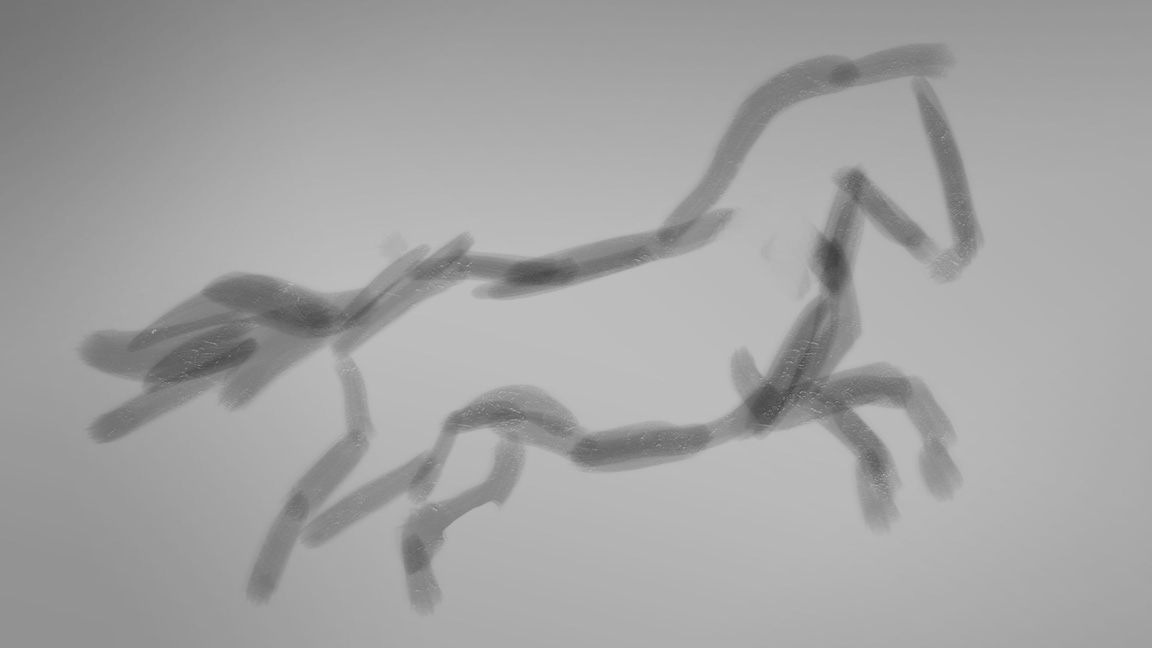
05. Create a loose gesture drawing
(Image: © Bobby Chiu)
Like a sho that we understand the most crucial parts of a horse and consume the basic shapes toss off, we privy make up a slack vignette. It's almost corresponding a undermine drawing, simply you dismiss see indications of the directions of the legs, the angle of the pelvis, the rib coop and midsection.
The read/write head and neck are strongly indicated and the position of the tail shows that the horse is in move. The gesture resume communicates the most vital information about your study.
06. Focus on vignette language

(Image: © Bobby Chiu)
Sketch language lets us take visual notes thus that we can effectively finish our work later. Therein case, we want to indicate landmarks where the horse cavalry's bones influence the skin surface the to the highest degree, such American Samoa at the joints. This is where the indications of bones are clearest and lead into the contractor areas. We can apply these indications to intimate the directions of the bones too.
07. Redraw the horse in contingent

(Image: © Bobby Chiu)
Accurate landmarks in the horse sketch make this job much easier. Look at every simplified blood line and see how more anatomical information tush be added. Use straight lines for muscles that are stretched or taut with tension, and curved lines for parts that are softer or being compressed.
Add subtleties to the muscles and detail to the horse's features, to make the frame easier to read. While you're doing this, take handle to conserve the essence of the original sketch.
08. View the subtle angles of your Equus caballus
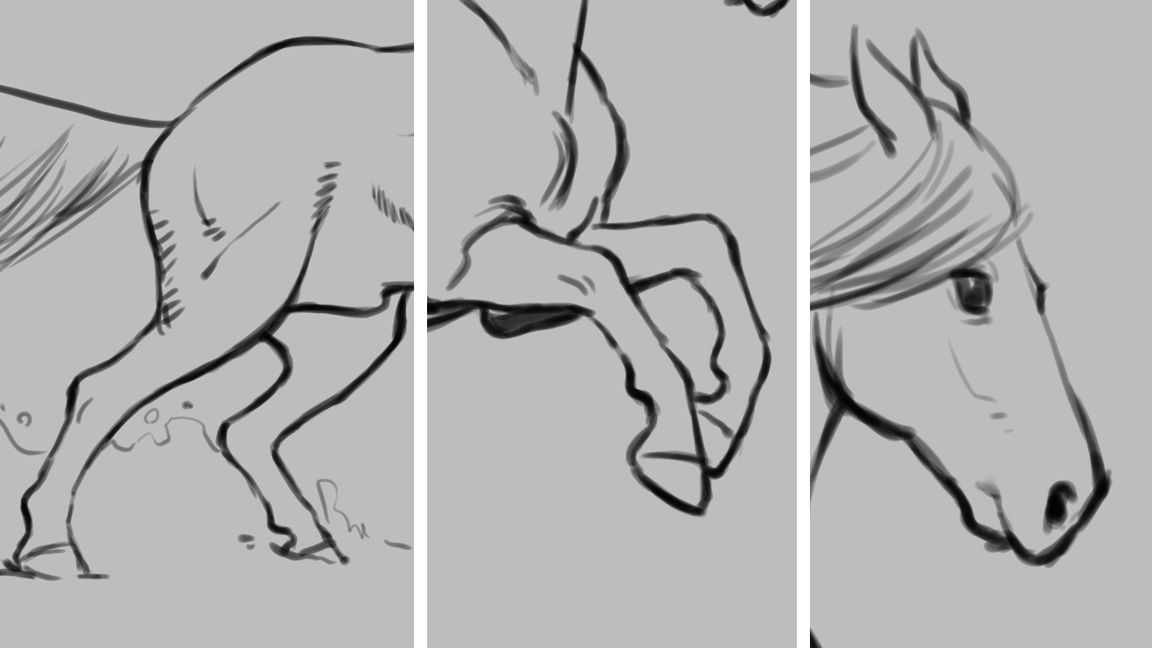
(Pictur: © Bobby Chiu)
Perfect profile or head word-on drawings can feel graphic and staged. Think nigh subtle angles: for example, the knight's eyes and the position of its head could Be almost in profile, with a tip of the other eye is visible to total much life. It's likewise important that the positions of the front and back pairs of legs are subtly different from one another – making them identical makes the horse wait very robotic.
09. Think near bloodline weight

(Image: © Bobby Chiu)
Parentage weight fire communicate many things. We can use it to accentuate the size of the horse's torso. Line weight can also separate one element from the other, like in the front legs. Areas where bones are indicated are harder, which gives them sharper shadows, which tin be represented with stronger line weight. For more subtle lines such as muscle definition, draw a couple of thin lines side away pull to indicate a softer line.
10. Add context with secondary action
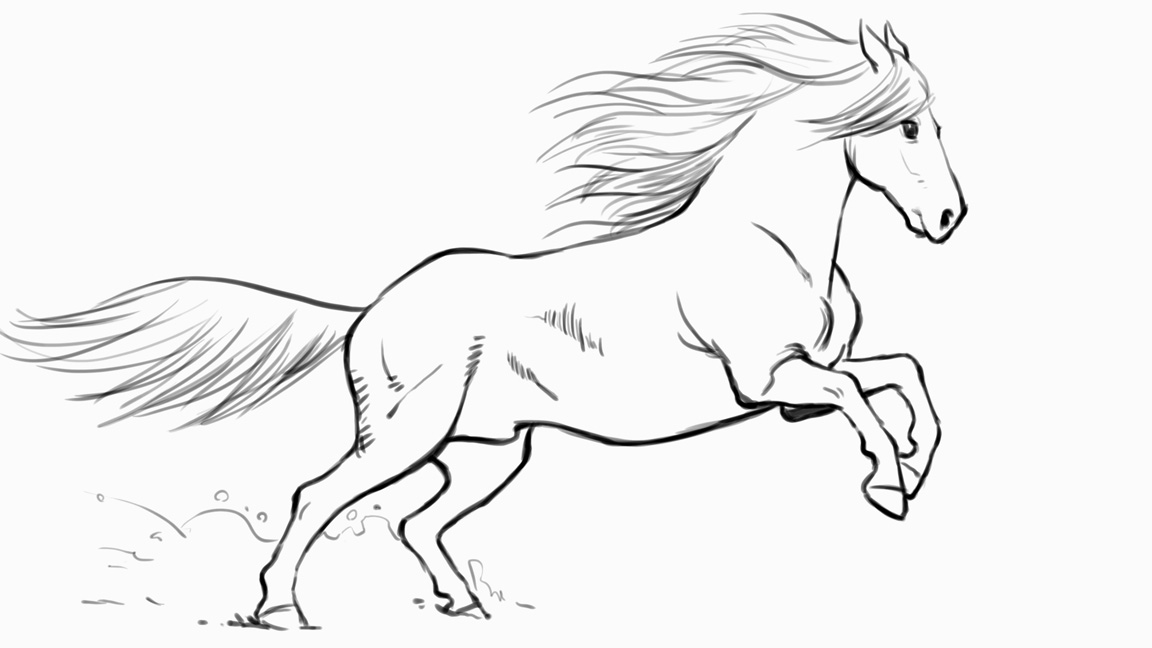
(Image: © Bobby Chiu)
The final step in how to pull in a buck is to tot subaltern actions, so much American Samoa the mane and tag hair's-breadth blowing in the wind. These elements add dynamics to our drawings, and are vital for display motion in action scenes.
When showing secondhand natural process, remember to consider line weight and where shadows will fall. Tributary action can also relate to external elements that are affected past the horse, same a cloud of junk that the sawbuck kicks high as information technology gallops.
Related articles:
- How to draw a face
- How to draw a cat
- The best pencils for colouring, drawing and sketching
Related articles
Source: https://www.creativebloq.com/how-to/how-to-draw-a-horse
Posted by: warfieldtonts1978.blogspot.com
0 Response to "How to draw a horse - warfieldtonts1978"
Post a Comment